
01
Requirements & feasibility
We review the application, operating conditions, interfaces, and evidence needed to define a feasible route.
Custom Development
AstraValve develops high-pressure valve solutions around the defined fluid, pressure, flow, actuation, interfaces, packaging, and operating environment.
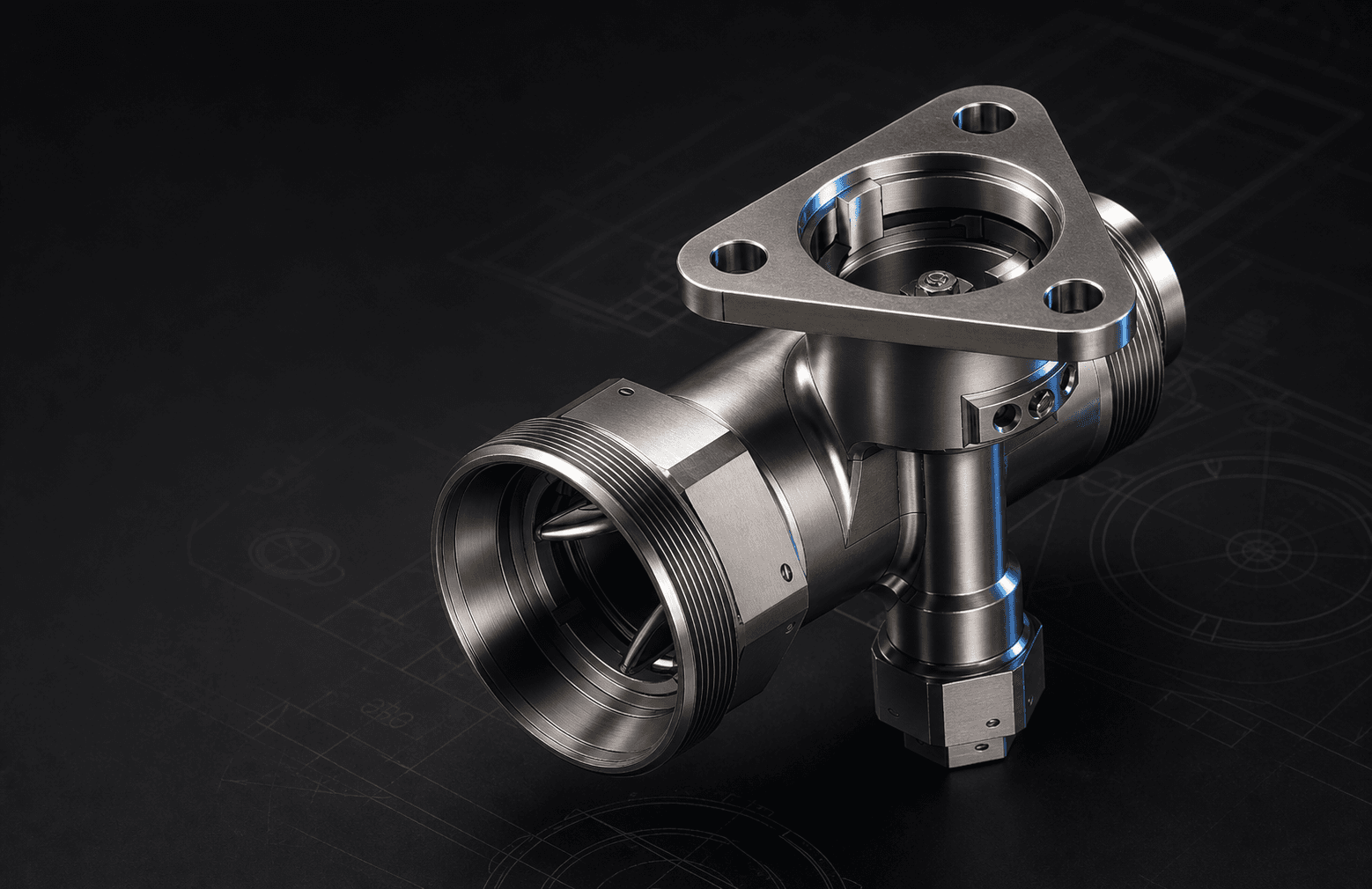
Our development process
Each programme is scaled to the maturity of the requirement. Gates, evidence, and deliverables are agreed before work advances.
01
We review the application, operating conditions, interfaces, and evidence needed to define a feasible route.
02
A valve architecture is shaped around performance, packaging, actuation, and manufacturability.
03
Structural, thermal, and flow analyses are selected to test the design assumptions.
04
Engineering hardware is produced with controlled drawings, materials, and inspection requirements.
05
The agreed test plan is used to evaluate function, pressure integrity, and endurance objectives.
06
Validated scope, documentation, integration support, and next-stage recommendations are delivered.
What we can customise
Options are evaluated as a system. A material, actuator, or interface choice is never treated independently of the operating case.
Start your project
Share the known requirements—even if the operating case is still developing. We will identify missing inputs and propose a sensible feasibility step.
Submit the operating case
Review feasibility and unknowns
Define scope and evidence
Our first step is to understand the operating case and identify a proportionate path to feasibility.